


Andrew Lowson: High streets are changing. That doesn’t mean they’re losing their value.
Andrew Lowson is Executive Director of York Business Improvement District. As the BID begins its third term, Andrew reflects on the challenges and opportunities facing York’s city centre, and why partnership, investment and a shared vision will be key to its future.
WALK down any high street in Britain and you’ll hear plenty of opinions about its future.
Some people will tell you the high street is in decline. Others will point to packed cafés, busy events and thriving independent businesses as proof that it’s alive and well.
The reality is more nuanced than either of those headlines.
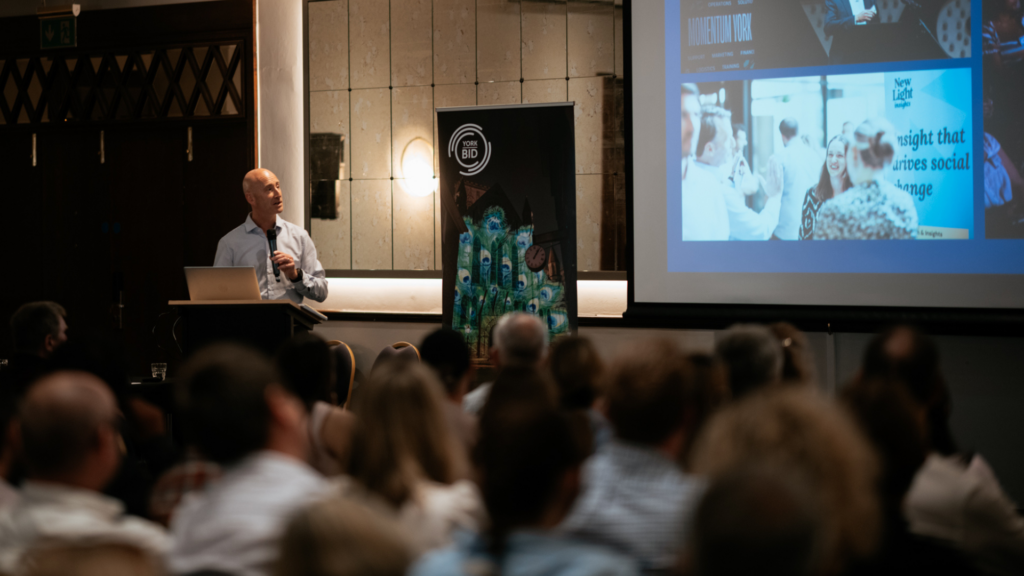
At York BID’s Annual General Meeting, we shared the latest economic data alongside insights into the national picture. The figures tell us something important: businesses are continuing to operate in an increasingly challenging environment, but they also remind us why collaboration has never mattered more.
Our latest city centre performance data shows that sales in York were down 3.4% during the first half of 2026 compared with the same period last year. Whilst that’s disappointing, it is slightly ahead of the national benchmark, which fell by 4%.
The month-to-month picture is also more complex than a single headline suggests. After several months of decline, June saw sales increase by 3.1% compared with June 2025, helped by the fact that last year’s June performance was particularly weak. What matters is understanding what sits behind these numbers.
Food and drink spending has fallen by 4.8% this year. While that isn’t the largest percentage decline across all sectors, it is our city’s biggest sector by value, making it especially significant for York’s economy. At the same time, businesses continue to face rising operating costs, inflationary pressures and increasing labour costs.
Another trend we’re watching closely is spending by York residents. Local people account for around 40% of all city centre spending, making them our single largest customer group. Resident spending has been declining for around 18 months, and that’s a concern for businesses that rely on regular local trade rather than occasional visitors.
These aren’t challenges unique to York. Consumer confidence remains fragile. Global events continue to influence energy prices and inflation, while businesses across the country are dealing with rising costs at a time when many customers have less disposable income.
The way people use our town and city centres has changed too. Home working has altered daily footfall patterns. Digital technology has transformed how people shop, bank and order food. Even retail itself has changed, with stores increasingly acting as collection points, showrooms or part of wider online businesses.
As our 2026 AGM speaker, Ojay McDonald of the Association of Town & City Management, highlighted, recognising these changes is relatively easy. Responding to them is much harder. Every town and city is shaped by numerous organisations, property owners, public bodies and communities. Creating meaningful change requires those groups to work together.
Against that backdrop, Business Improvement Districts have become increasingly important. York BID exists to bring businesses together, coordinate action and help deliver improvements that simply wouldn’t happen otherwise.
Sometimes that’s responding quickly to issues affecting businesses, such as the partnership work that rapidly transformed the area behind Panda Mami and Radisson York after concerns around anti-social behaviour.
Sometimes it’s creating new reasons for people to spend time in the city, whether that’s introducing children’s play spaces, investing in public realm improvements or delivering events that encourage people to visit.
Sometimes it’s less visible but just as important – bringing businesses, public agencies and decision-makers around the same table to solve problems together.
And we’ll continue to champion the things that matter most to York businesses: keeping the city safe and welcoming, promoting York digitally, supporting regeneration projects and building pride in our city centre.
The data also reinforces why York businesses need a strong collective voice.
Nationally, we’ll continue to push for business rates reform, greater support if inflation rises again, making it more affordable for businesses to employ young people, and increased investment in the public services that help our towns and cities thrive.
Locally, we’ll continue to work with partners to improve access and parking, tackle anti-social behaviour, support regeneration and ensure the challenges businesses face remain firmly on the agenda.
Despite the challenges, I remain optimistic about York. Few cities have the strengths we enjoy: an exceptional independent business community, a world-class visitor offer, passionate local businesses and organisations that increasingly recognise the value of working together.
The figures remind us that we cannot be complacent. But they also reinforce something else.
Strong town and city centres are built through partnership, investment and a shared commitment to making places better. That’s exactly what York BID was created to do, and it’s exactly what we’ll continue doing over the next five years.